
Building an online audience is easier than ever, but creating a devoted online community that remains active for years is the true challenge.
As social media algorithms become less reliable, brands, creators, and businesses are shifting toward owned communities where they control engagement, relationships, and long-term growth.
The challenge is clear.
Even though over 5.56 billion people are online, the majority of online communities suffer from low participation, inconsistent engagement, and inactive members.
Why does this happen?
Many online communities rely on unstructured interaction strategies rather than established mechanisms designed for long-term loyalty.
The strongest communities follow proven frameworks that create trust, participation, emotional connection, and continuous value for members.
Whether it’s a creator membership group, SaaS community, or learning platform, successful communities are built using repeatable models that keep members engaged while supporting business growth.
This comprehensive guide pulls back the curtain on the 9 proven frameworks for online community building strategies used by world-class agencies and top-tier creators to construct vibrant, self-governing, and highly profitable digital ecosystems.
Understanding Community Building Frameworks
Sustainable online communities grow through structured engagement rather than sporadic content and activity. An online community building framework is a structured system that defines:
- How your community delivers value
- How members contribute back
- How engagement and retention grow over time
The cycle is simple:
Value for Members → Trust → Participation → Long-Term Loyalty
Without a framework, most communities face common problems, like:
- Community manager burnout
- Inactive or silent channels
- Low member retention
- No clear business impact
A strong framework helps communities grow consistently, improve member retention, and encourage deeper participation over time.
The 9 Online Community Building Strategies for Loyal Members
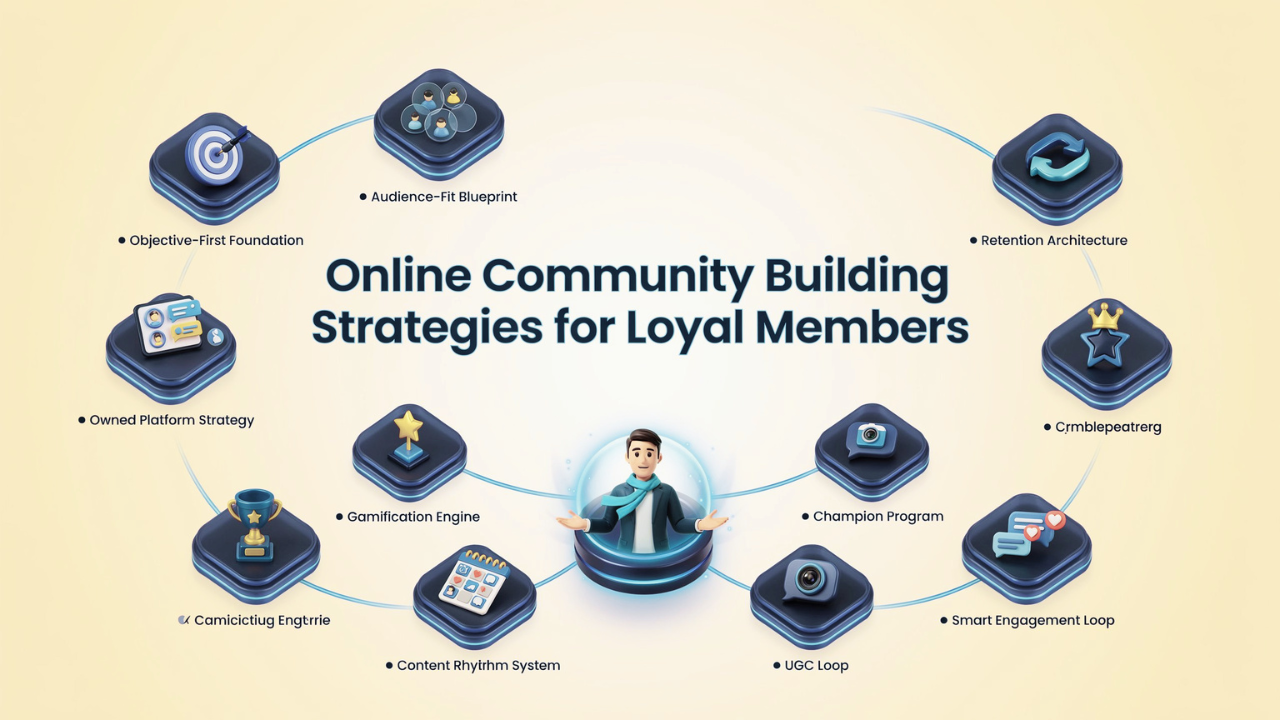
1. Objective-First Foundation
Before creating an online community or inviting members, you can start by defining the transformation your community will deliver. Start by asking yourself:
➖ What issues are members going to address here?
➖ For what reason should they remain long-term?
➖ What kind of emotional bond will the community establish?
Online communities without a clear purpose frequently struggle with low engagement and identity, so a strong mission provides direction, trust, and long-term loyalty.
2. Audience-Fit Blueprint
Try never to guess what your audience wants and use surveys, analytics, and direct conversations to understand:
➖ Member pain points
➖ Communication preferences
➖ Engagement habits
➖ Unmet needs
The better you understand your audience, the easier it becomes to create experiences people actually return for.
3. Owned Platform Strategy
Building only on Facebook Groups or Discord means building on rented platforms. One algorithm or policy change can limit your reach overnight.
Establishing exclusively on Discord or Facebook groups involves constructing on platforms that are rented. Your reach could be suddenly reduced by a single algorithm or regulation change.
Owned communities give you:
➖ Full brand control
➖ Direct member communication
➖ Better data ownership
➖ Stronger long-term growth
Pro Tip: Go for AI-powered platforms, such as Cohortia, which can assist in automating engagement, content delivery, and member interactions to ensure the community stays active from the very beginning.
4. Gamification Engine
Encourage the desired behaviors to establish a self-sustaining ecosystem.
Take a look at the traditional models, which feature leaderboards, automated unlockable tiers, reputation scores, and personalized badges. As a result, passive consumption is transformed into active, self-correcting contributions.
With these systems increasing:
➖ Recognition
➖ Motivation
➖ Achievement
It is essential to reward meaningful participation in the community rather than low-quality spam.
5. Content Rhythm System
Online community building is faster when engagement becomes predictable, so instead of posting randomly, build a consistent content rhythm with:
➖ Weekly discussions
➖ Monthly events
➖ Member spotlights
➖ Q&A sessions
➖ Trend-based conversations
Consistency helps members build participation habits, which is essential for long-term Online Community Building.
To maintain communities' regular activity, platforms such as Cohortia can assist in automating discussions, content flow, and topic curation.
6. User-Generated Content Loop
Your strong online community building does not rely only on admins for content, the best communities encourage members to create, share, and lead discussions themselves.
To increase participation by highlighting top contributors through:
➖ Featured posts
➖ Recognition systems
➖ Social promotion
➖ Exclusive opportunities
When members feel valued and heard, they contribute more often, creating a self-sustaining engagement loop.
7. Ambassador & Champion Program
Look for the top 1% of your community's power users. These individuals are very engaged, naturally lending a hand to others and fostering dialogue.
Identify these top contributors and turn them into community ambassadors by offering:
➖ Public recognition
➖ Leadership roles
➖ Exclusive access
➖ Early product previews
➖ Networking opportunities
These members strengthen online community building strategies, culture, welcome new users, and help scale engagement naturally.
8. Smart Engagement Loop
As the online community grows, generic experiences reduce engagement. With strong online community building strategies, focus on personalized member experiences using behavior and engagement data.
The cycle looks like this:
More engagement → Better insights → Better personalization → Higher retention
Personalization can include:
➖ Custom onboarding
➖ Personalized recommendations
➖ Targeted notifications
➖ Suggested discussions
The more relevant the experience becomes, the longer members stay active, so platforms like Cohortia help automate personalized engagement and community management for scalable growth.
9. Retention-Layer Architect
Long-term loyalty is built through more than discounts and renewal reminders. Strong communities retain members by creating deeper engagement and emotional connection through four retention layers:
➖ Transactional Layer: Discounts, resources, and member benefits
➖ Engagement Layer: Discussions, events, and regular participation
➖ Value Layer: Personal or professional growth for members
➖ Emotional Layer: A sense of identity, belonging, and shared mission
When members feel connected to the community, they are far more likely to stay long term.
Future Trends in Online Community Building Strategies
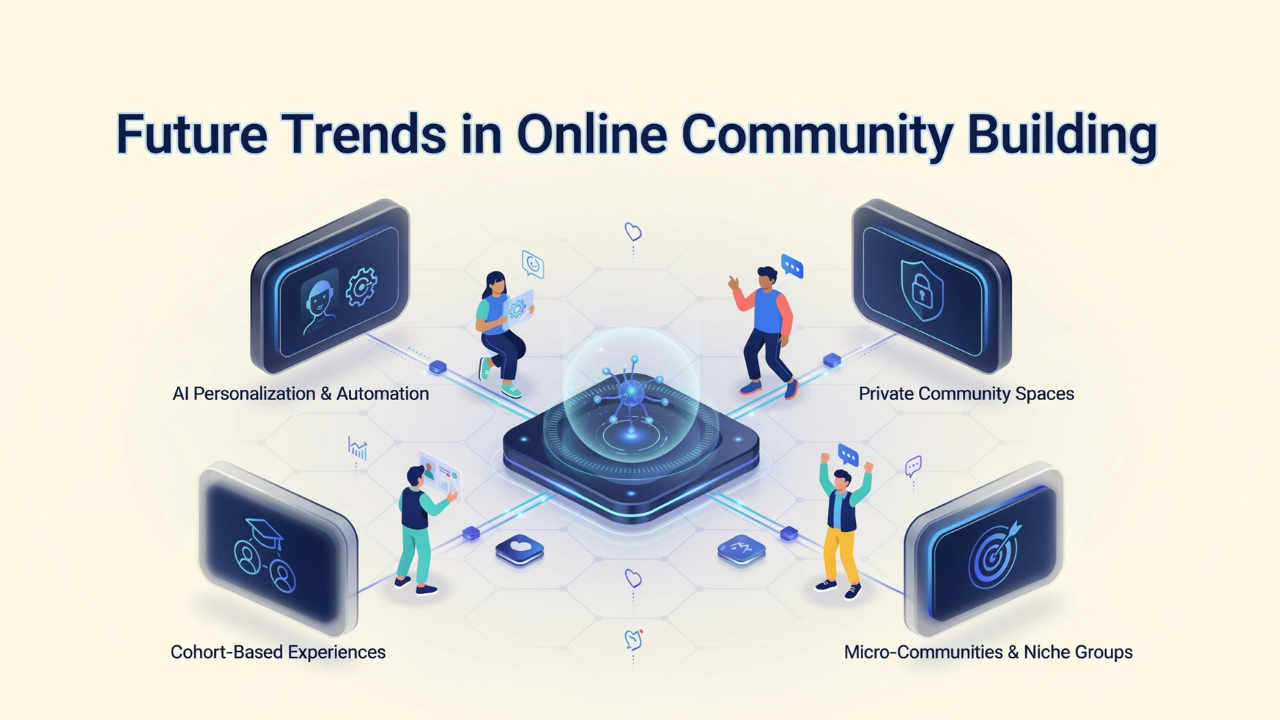
A. AI-Powered Personalization & Smart Automation
Members now expect personalized experiences based on their interests and activity, with AI-powered tools helping the online community:
➕ Predict member churn
➕ Automate engagement
➕ Match members intelligently
➕ Make onboarding experiences unique
As the online community grows, manual management becomes more difficult, and tools like Cohortia help automate engagement and create personalized member experiences while reducing operational workload.
B. Private Communities Over Public Social Platforms
Building private online communities enables creatives and brands to go beyond algorithm-driven social media platforms by providing:
➕ Stronger member relationships
➕ More control over engagement
➕ Long-term brand stability
Owned platforms are becoming a major part of sustainable online community building strategies.
C. Cohort-Based Community Experiences
Cohort-based communities are becoming more popular because they encourage deeper participation and collaboration. Members join around shared goals, learning programs, or networking experiences, which helps improve engagement and retention over time.
D. Micro-Communities & Niche Groups
Smaller niche communities are growing faster than large general groups. Communities built around specific interests, industries, or goals often create more meaningful conversations, stronger relationships, and higher participation.
Conclusion
Successful Online Community Building is not about posting constantly or chasing short-term engagement.
Strong online communities are developed through organized systems centered on emotional connection, trust, participation, acknowledgment, and personalization.
As a result, instead of deploying everything at once, focus on establishing the online community one layer at a time.
- Define a clear purpose
- Understand your audience
- Create consistent engagement habits
- Plus, retention and personalization as the community grows
A loyal online community is becoming one of the most valuable digital assets for brands and creators.
The right platform also plays a major role, solutions like Cohortia help automate discussions, improve engagement, and support scalable community growth through AI-driven interactions and live communication tools.
Brands that invest in strong community ecosystems today will build deeper loyalty and stronger long-term growth tomorrow.
FAQs about Online Community Building Strategies
1. What is an online community building strategy?
Ans: An organized plan for expanding, involving, and keeping members of a digital community is called an online community building strategy.
2. How long does it take to build a loyal online community?
Ans: Most successful communities take several months to develop strong engagement patterns and long-term loyalty.
3. Which online community building trends are the most popular?
Ans: In your opinion, the following are significant developments in online community building:
- AI-powered personalization
- Owned community platforms
- Micro-communities
- Creator-led ecosystems
Cohortia, as the appropriate platform, can undoubtedly automate the "pull marketing" process, in which communities develop trust and loyalty, resulting in long-term revenue growth.